 +254 114 069 986
 PPB Certified

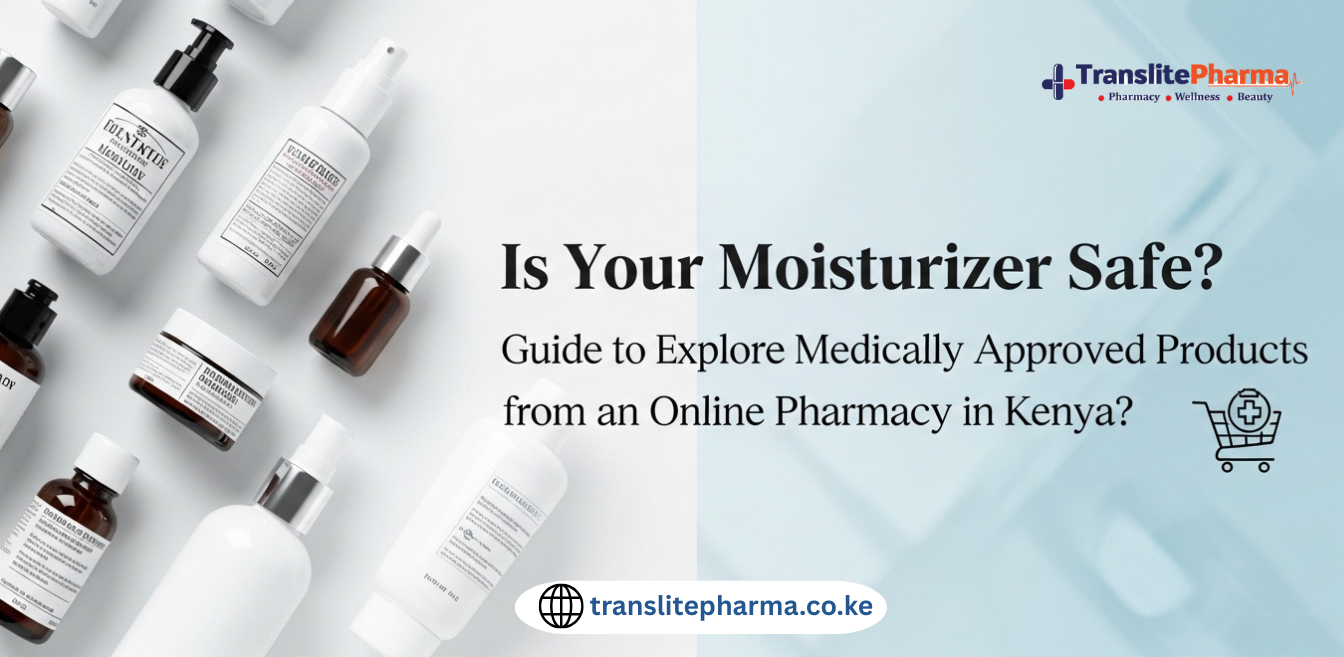
Moisturizer is the one product most people use every day, yet it’s also one of the easiest to get wrong. A formula that’s too heavy can clog pores and trigger breakouts, while one packed with fragrance or harsh actives can sting, peel, or quietly weaken your skin barrier over time. It is further increased by improperly storing the products in heat, close to expiry or (worse-case scenario) fake, since even a good list of ingredients will not be useful when what was in the jar is not what the label says.
That’s why shopping via an online pharmacy in Kenya should be about more than convenience. In this guide, we’ll show you how to spot red flags, verify authenticity, read labels quickly, and choose options that align with medically sound standards, plus how to pair skincare decisions with pharmacist support when needed.
Choosing an Online Pharmacy in Kenya to Explore Medically Approved Products
A moisturizer is not merely a cosmetic when it is curing dryness caused by eczema/acne/drugs/allergies/sensitized skin. In such instances, what you desire is uniform quality, good storage, and sourcing.
Here’s what “medically approved” should mean in practical terms:
- The seller operates as a legitimate pharmacy or pharmacy-led outlet.
- Products are traceable to known manufacturers/distributors
- Expiry dates, batch/lot numbers, and seals are intact
- A qualified pharmacist can advise if a product fits your skin concern and other medications.
When you shop online, your job is to reduce risk: confirm credibility first, then choose the right formulation for your skin.
Why Moisturizer Safety Matters?
Moisturizers sit on your skin for hours, often twice a day. If the formula is irritating or if the product is counterfeit, your skin barrier can weaken. That can lead to:
- Burning, itching, or redness that doesn’t settle
- Sudden acne flare-ups or tiny bumps (comedones)
- Dark marks after inflammation (especially on deeper skin tones)
- Worsening dryness despite “more moisturizing”
A trusted online pharmacy in Kenya can be a safer route than informal sellers because pharmacies typically have clearer accountability and tighter supply practices- when you verify they’re legitimate.
Ingredient Sanity-Check: What to Look For
You don’t need to memorize chemistry, but you should recognize patterns.
If You Have Dry or Sensitive Skin
Look for barrier-supporting ingredients like:
- Ceramides
- Glycerin
- Petrolatum (great for sealing in moisture)
- Hyaluronic acid (best when layered under a richer cream)
Be cautious with:
- Heavy fragrance or essential oils if you’re reactive
- Strong “tingling” activities in leave-on creams if your barrier is compromised
If You’re Acne-Prone
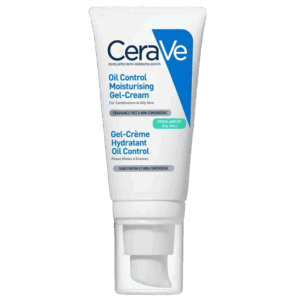
Favor lightweight, non-comedogenic textures (gel-cream or light lotion). Helpful ingredients often include:
- Niacinamide (calms oiliness and supports barrier)
- Panthenol (soothing)
- Azelaic acid products (if you’re targeting acne/marks- ideally with guidance)
Be cautious with:
- Very heavy oils
- “Whitening” creams with unclear ingredient lists (a common red flag category)
The Authenticity Test: Packaging, Labeling & Storage Clues
Counterfeits can look convincing in photos. Use a quick “real-world” checklist when the product arrives:
- Outer box intact, no gluey reseals or broken flaps
- Tube/jar has a factory seal
- Batch/lot number present and readable
- Expiry date printed clearly
- Ingredients list is complete
- Texture and scent match what you’ve used before
Also, consider storage realities. Heat can degrade formulas, especially vitamin C creams, retinoids, and some sunscreens. If a product arrives warm, runny, or separated, treat that as a quality warning.
Checklist: How to Vet a Moisturizer Before You Buy Online
Use this step-by-step approach to make your decision fast and defensible:
- Confirm the seller is a pharmacy-led business with clear contact details and location information
- Check for pharmacist support for suitability questions
- Review the product listing for full name, size, ingredients, and clear photos of the packaging
- Look for batch/lot and expiry details on arrival; refuse items with missing or altered labeling
- Match the moisturizer to your skin goal
- Patch-test: apply a small amount on the jaw/inner arm for 24–48 hours before full-face use
- If irritation persists beyond mild, short-lived adjustment, stop and consult a clinician
In case you are interested in finding out medically approved options when it comes to sensitive skin or routines involving treatment, this checklist will allow you to eliminate the most typical pitfalls without having to think too hard about it.
Common “Too Good To Be True” Claims To Ignore
Be extra skeptical of moisturizers that claim they can do everything instantly. Red flags include:
- “Results in 24 hours” for deep issues like melasma or scars
- No ingredient list, or ingredients hidden behind marketing language
- Unverified “clinic-grade” claims with no manufacturer details
- Extremely low pricing compared to typical market range
- Social-media-only seller identity, with no pharmacy credentials
If you’re dealing with eczema, acne treatment dryness, or post-procedure skin, convenience should never replace safety and traceability.
Where Supplements Fit In (And Where They Don’t)
Topical care matters, but some people also ask about adding vitamins or beauty capsules. The key is to treat these as supportive, not magical.
If you’re considering supplements for health care, prioritize:
- Products with clear dosing, quality standards, and realistic benefits
- Instructions in case you are pregnant, breastfeeding, controlling chronic diseases, or using prescription drugs.
Also, keep in mind- a harsh moisturizer will not be canceled by supplements. Repair the topical first, and then think about specific assistance when it will be appropriate to your health profile. If you already take supplements for health care, a pharmacist should tell you whether any of the ingredients overlap with your existing medicines or conditions.
Conclusion
A safe moisturizer is one that matches your skin needs, has transparent ingredients, and comes from a traceable supply chain, not one with the loudest claims. When you shop with an online pharmacy in Kenya, use the checklist above to verify authenticity, reduce irritation risk, and make decisions you’d feel comfortable defending to a dermatologist.
To explore medically approved products or moisturizers and other over-the-counter medical items- check out the online catalogue of Translite Pharma and contact them for better guidance and purchase.
FAQs
How do I know if a moisturizer is counterfeit?
Check for tamper seals, readable batch/lot numbers, clear expiry printing, and a complete ingredients list; missing or altered labeling is a major warning sign.
Should I patch-test every new moisturizer?
Yes, especially if you have sensitive or acne-prone skin; test on a small area for 24–48 hours before applying to your full face.
What ingredients help repair a damaged skin barrier?
Ceramides, glycerin, petrolatum, and panthenol are common barrier-friendly ingredients that reduce dryness and irritation.
Can a moisturizer cause acne even if it says “non-comedogenic”?
It can; “non-comedogenic” is not a guarantee, so monitor clogged pores for 1–2 weeks after introducing a new product.
Do I need a pharmacist’s advice for choosing a moisturizer?
If you’re on acne meds, have eczema, allergies, or persistent irritation, pharmacist guidance can help you pick a safer formula and avoid ingredient conflicts.
 No products in the cart.